
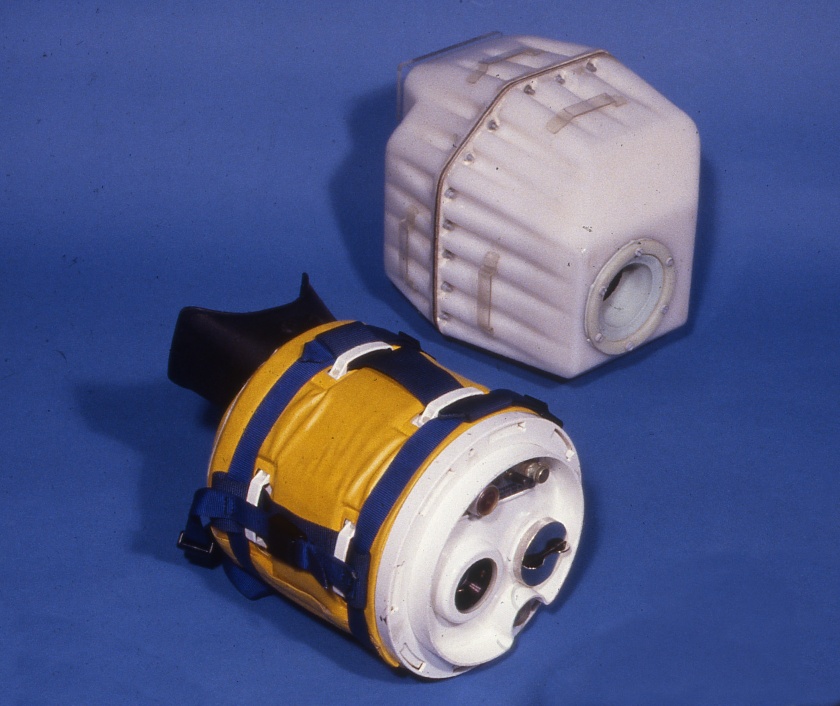
 P4228 in training use with Royal Navy
Data Table for P4221 / P4228 |
|
| Sensing Method | Pyroelectric effect in TGS crystal material. Temperature changes from the scene cause charge to build up / decay on the inner face of the target material. |
| Sensor Type / Size | EEV Pevicon P8092, 18mm circular target area |
| Lens Parameters | 18mm f/0/7 giving 50° field of view. Fixed focus by moving tube/yoke assembly at build |
| Dynamic Range / Control | 60°C, automatic iris in lens |
| Display | 38mm CRT with magnifier |
| Sensitivity (MDTD) | <500mK, usually ~300mK in 'Pan' with a skilled operator |
| Power Source | Internal carrier with 10 'AA' cells. Used LR6 alkaline, or optionally NiCd |
| Power System | Battery regulated to 8.7V, camera ~4W ( |
| Video Output | BNC, produced in 60Hz / 525 line and 50Hz / 625 line variants |
| Image Processing | Direct image or 'chopped'. Later builds of P4228 added a 1-field digital image store to give a constant image in chop mode |
| Manufacturer Status | Built as 'EEV'. Obsolete, no longer serviced. |
| Number and Years Built | Low 100's from 1981 - 1985 |
| Export Status | Not controlled |
| Publicity | P4221 camera datasheet Pevicon tube P8092 datasheet |
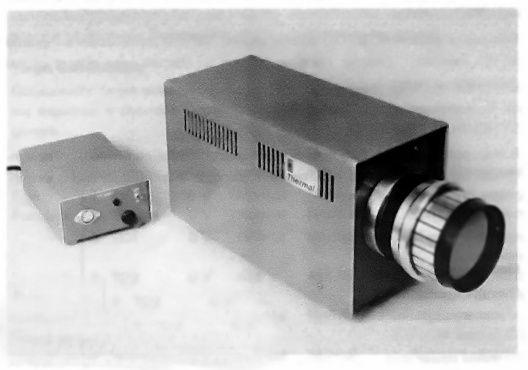 |
The P4200 was the first camera product from EEV, mainly as a vehicle to demonstrate Pevicon tubes. It was a contemporary product of the P4221 with a narrow field of view lens, manually focussed, for laboratory use. It included access to a full set of tube adjustments and controls. P4200 datasheet The cameras were also used as demonstration platforms for the more specialist tube types being sold Pevicon tube P8093 datasheet Pevicon tube P8226 datasheet |
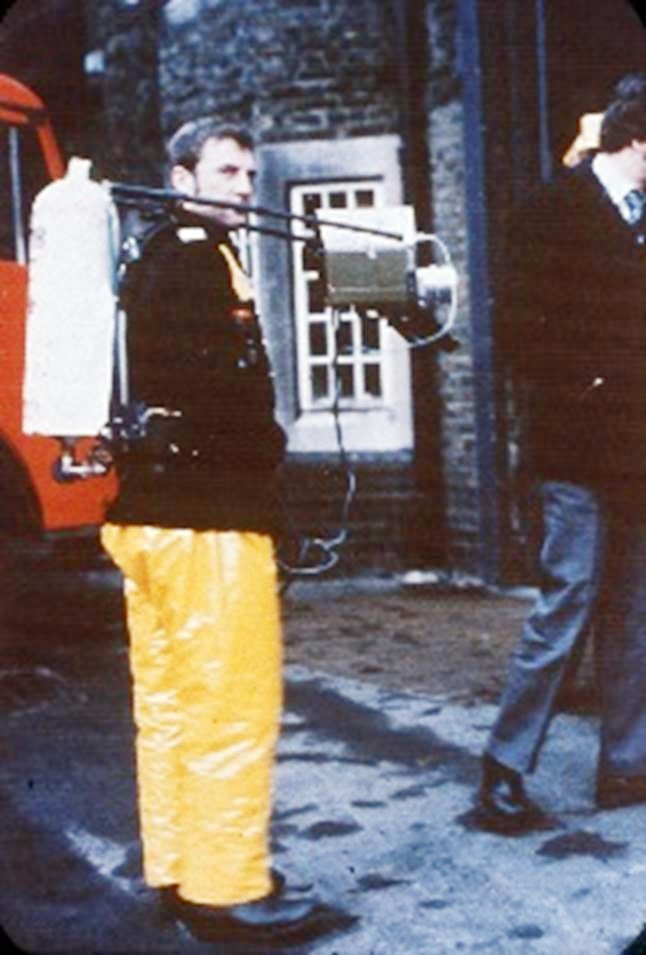 |
The first trial with the fire service was 'hands-free', due to the camera weight. The camera appears to be a variation on the P4200 |
 |
The P4222 was a contemporary product of the P4228 with a narrow field of view lens, manually focussed, for portable use. It included a crude temperature measuring/comparing function based on driving the video to black. An attempt was aslo made to use a 2/3" tube but resolution was not sufficient due to thermal conduction across the target material P4222 datasheet |